

It aids in maintaining accurate financial records and statements that mirror the true financial position of your business. Misunderstanding normal balances could lead to errors in your accounting records, which could misrepresent your business’s financial health and misinform decision-making. The trial balance information for Printing Plus is shown previously. If we go back and look at the trial balance for Printing Plus, we see that the trial balance shows debits and credits equal to $34,000. Presentation differences are most noticeable between the two forms of GAAP in the Balance Sheet.
- If you check the adjusted trial balance for Printing Plus, you will see the same equal balance is present.
- This process will be necessary for each IP address you wish to access the site from, requests are valid for approximately one quarter (three months) after which the process may need to be repeated.
- As a contra revenue account, sales discount will have a debit balance and is subtracted from sales (along with sales returns and allowances) to arrive at net sales.
- Since your company did not yet pay its employees, the Cash account is not credited, instead, the credit is recorded in the liability account Wages Payable.
What is the normal balance of the Accounts Payable?
A trial balance simply shows a list of the ledger accounts and their balances. Its purpose is to test the equality between total debits and total credits. By understanding the normal balance concept, you can correctly record transactions, such as the cash injection and the equipment purchase, in your double-entry bookkeeping system. Remember, the normal balance is the side (debit or credit) that increases the account.
5 Prepare Financial Statements Using the Adjusted Trial Balance
For example, if you determine that the final debit balance is $24,000 then the final credit balance in the trial balance must also be $24,000. If the two balances are not equal, there is a mistake in at least one of the columns. The double-entry system requires that the general ledger account balances have the total of the debit balances equal to the total of the credit balances. This occurs because every transaction must have the debit amounts equal to the credit amounts. For example, if a company borrows $10,000 from its local bank, the company will debit its asset account Cash for $10,000 since the company’s cash balance is increasing. The same entry will credit its liability account Notes Payable for $10,000 since that account balance is also increasing.

Income Statement
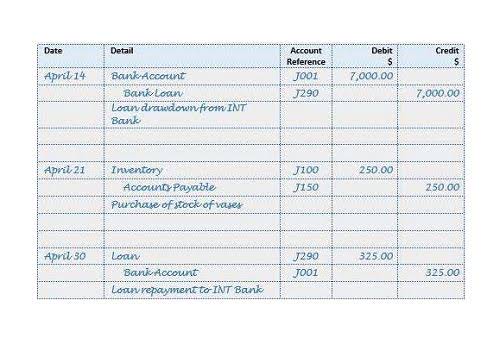
- Here’s a simple table to illustrate how a double-entry accounting system might work with normal balances.
- Preparing an unadjusted trial balance is the fourth step in the accounting cycle.
- He has been a manager and an auditor with Deloitte, a big 4 accountancy firm, and holds a degree from Loughborough University.
- The total overreported income was approximately $200–$250 million.
- The 10-column worksheet is an all-in-one spreadsheet showing the transition of account information from the trial balance through the financial statements.
- The trial balance information for Printing Plus is shown previously.
For the past 52 years, Harold Averkamp (CPA, MBA) has worked as an accounting supervisor, manager, consultant, university instructor, and innovator in teaching accounting online. Concepts Statements give the Financial Accounting Standards Board (FASB) a guide to creating accounting principles and consider the which set of accounts below would have a normal debit balance? limitations of financial statement reporting. However, if totals are equal, it still does not fully guarantee that no errors were made; for example, when a transaction was recorded twice or when it was not recorded at all. Chartered accountant Michael Brown is the founder and CEO of Double Entry Bookkeeping.
Our mission is to improve educational access and learning for everyone.
After the unadjusted trial balance is prepared and it appears error-free, a company might look at its financial statements to get an idea of the company’s position before adjustments are made to certain accounts. A more complete picture of company position develops after adjustments occur, and an adjusted trial balance has been prepared. These next steps in the accounting cycle are covered in The Adjustment Process. For example, Cash has a final balance of $24,800 on the debit side. This balance is transferred to the Cash account in the debit column on the unadjusted trial balance.
It is the side of the account – debit or credit – where an increase in the account is recorded. You will not see a similarity between the 10-column worksheet and the balance sheet, because the 10-column worksheet is categorizing all accounts by the type of balance they have, debit or credit. The statement of retained earnings always leads with beginning retained earnings. Beginning retained earnings carry over from the previous period’s ending retained earnings balance. Since this is the first month of business for Printing Plus, there is no beginning retained earnings balance. Notice the net income of $4,665 from the income statement is carried over to the statement of retained earnings.
Next you will take all of the figures in the adjusted trial balance columns and carry them over to either the income statement columns or the balance sheet columns. A current asset account that reports the amount of future rent expense that was paid in advance of the rental period. The amount reported on the balance sheet is the amount that has not yet been used or expired as of the balance sheet date. Insurance Expense, Wages Expense, Advertising Expense, Interest Expense are expenses matched with the period of time in the heading of the income statement. Under the accrual basis of accounting, the matching is NOT based on the date that the expenses are paid.
At the end of the accounting year the balances will be transferred to the owner’s capital account or to a corporation’s retained earnings account. This means that when you increase an asset account, you make a debit entry. For instance, when a business buys a piece of equipment, it would debit the Equipment account. If you look in the balance sheet columns, we do have the new, up-to-date retained earnings, but it is spread out through two numbers. If you combine these two individual numbers ($4,665 – $100), you will have your updated retained earnings balance of $4,565, as seen on the statement of retained earnings. Treat the income statement and balance sheet columns like a double-entry accounting system, where if you have a debit on the income statement side, you must have a credit equaling the same amount on the credit side.
- Take a couple of minutes and fill in the income statement and balance sheet columns.
- The amount reported on the balance sheet is the amount that has not yet been used or expired as of the balance sheet date.
- After the unadjusted trial balance is prepared and it appears error-free, a company might look at its financial statements to get an idea of the company’s position before adjustments are made to certain accounts.
- If the outcome of the difference is a whole number, then you may have transposed a figure.
- The five column sets are the trial balance, adjustments, adjusted trial balance, income statement, and the balance sheet.